Loading page
Plant & Equipment
Roveya connects plant, tools, custody, inspections, maintenance, faults and project allocation across the operation.

The asset, the site and project it is on, who has custody, its condition, the last inspection, the next service and every fault it has had.
Nine stages across three interfaces. Every movement, check and fault lands on the same asset record.
Availability
Availability is not a count of what you own. It is what is free, checked, serviceable and not already committed.
Totals by site and project, what is allocated, what is due for inspection or service, and what is out of service — in one position. Each reason an asset is unavailable comes from its own record:
Roveya shows what is available and why the rest is not. It does not automatically optimise deployment across sites.
Allocation
Asset, project, site, custodian, allocation date and expected return — with the condition it went out in.
A person allocates equipment. Roveya does not allocate plant automatically or optimise deployment across sites.

Allocated to a project and a site, so the register shows the job each asset is committed to.The project and site the asset is committed to.
A named custodian holds it. One step at handover: an asset, a person, a site and an expected return.A named custodian, set in one step at handover.
The expected return date is visible before it slips. The condition is recorded again when it comes back.Visible before it slips. Condition is recorded out and again on return.
Allocation states
Transfers between sites are recorded, not assumed. Overdue returns are surfaced rather than chased verbally.
Attached to the work it supports
Equipment should not sit in a separate register disconnected from delivery. The same asset record carries its project, site and custodian, and links to:
Field users should not need a separate system to understand the equipment they are responsible for.
Inspections
Pre-use checks, periodic inspections and condition checks — each with an inspector, an outcome, defects and the next due date.
Where a statutory examination applies, the certificate is held in Compliance & RAMS and read from the same record. Roveya does not determine what is statutory for your fleet.
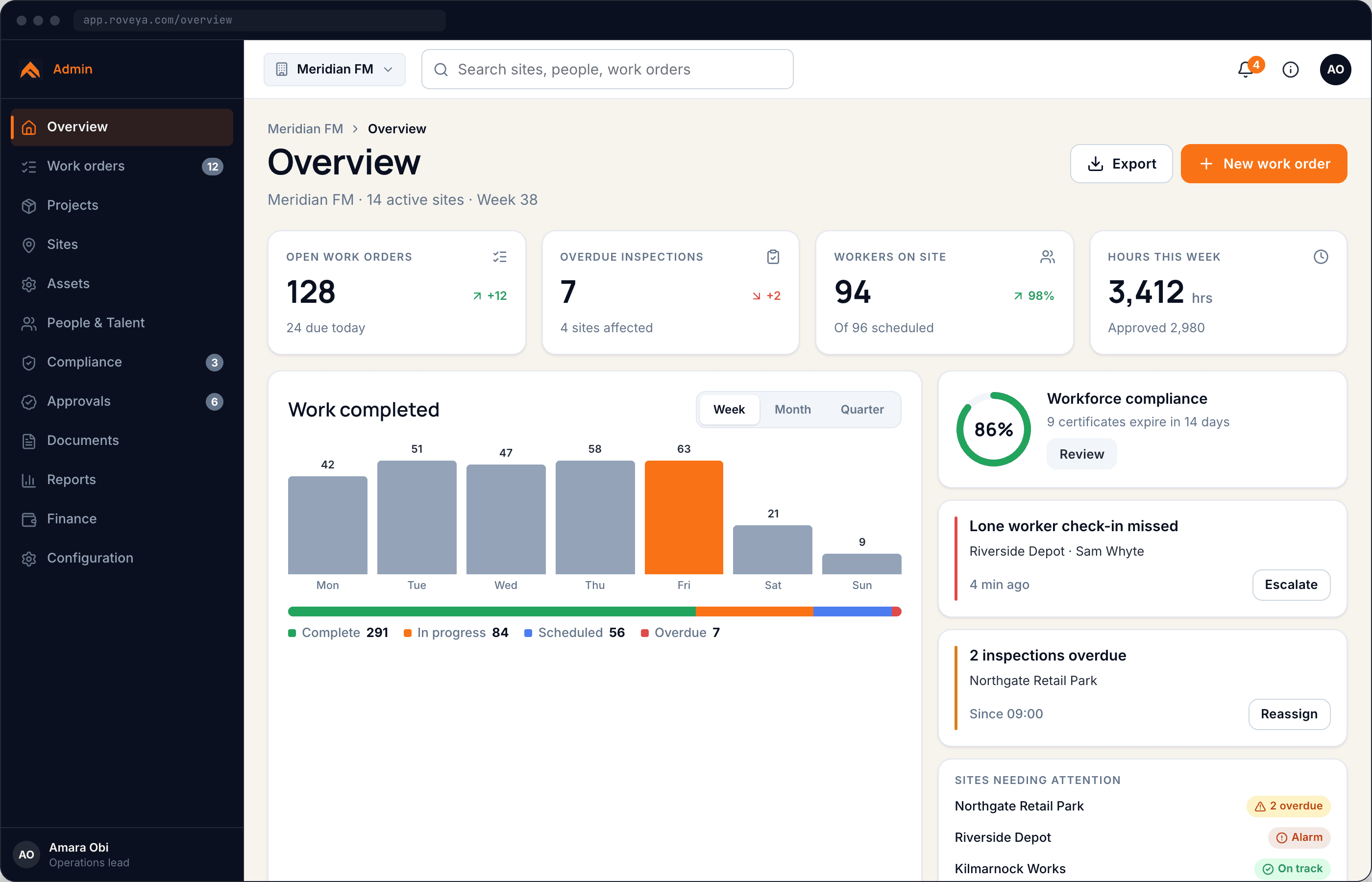
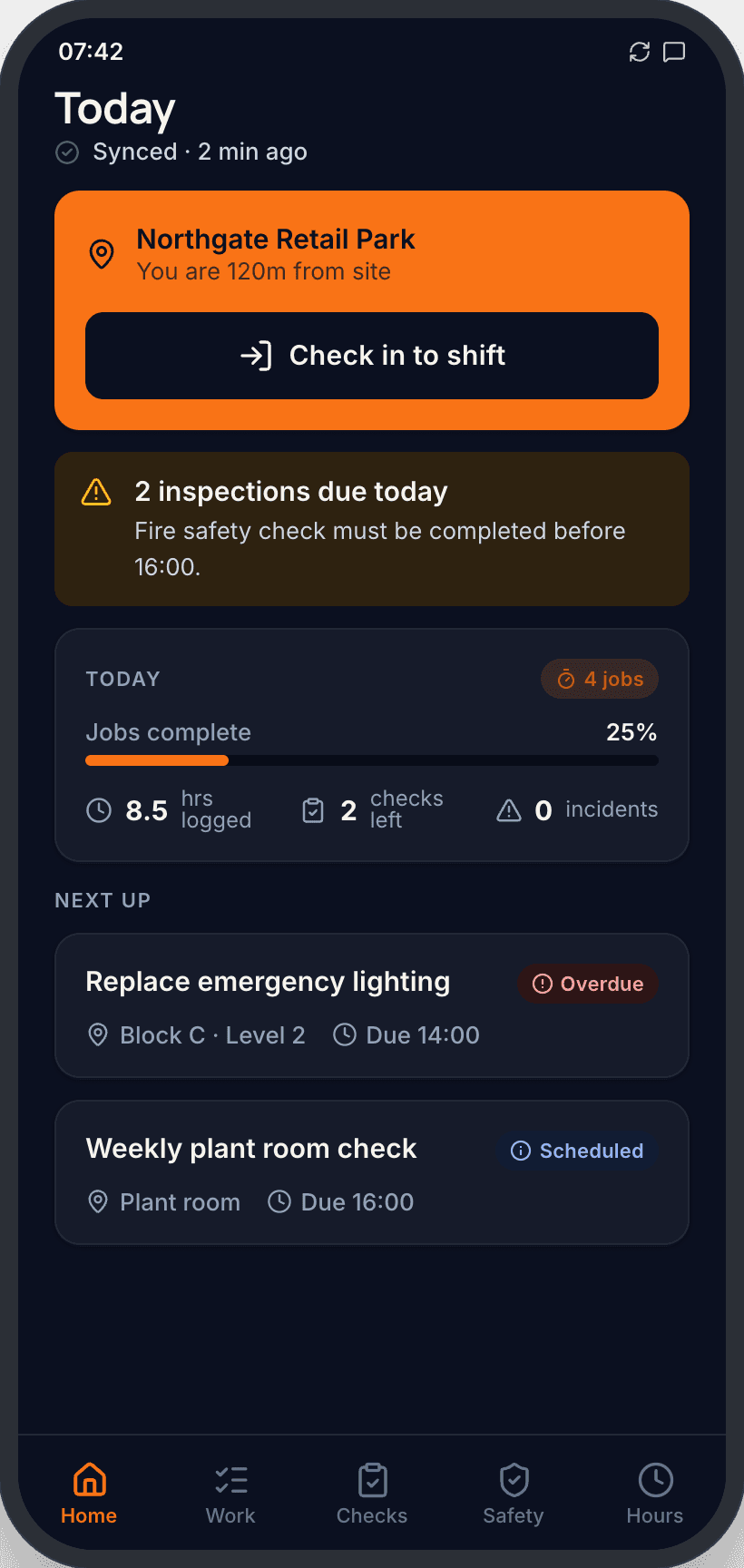
Roveya Ops
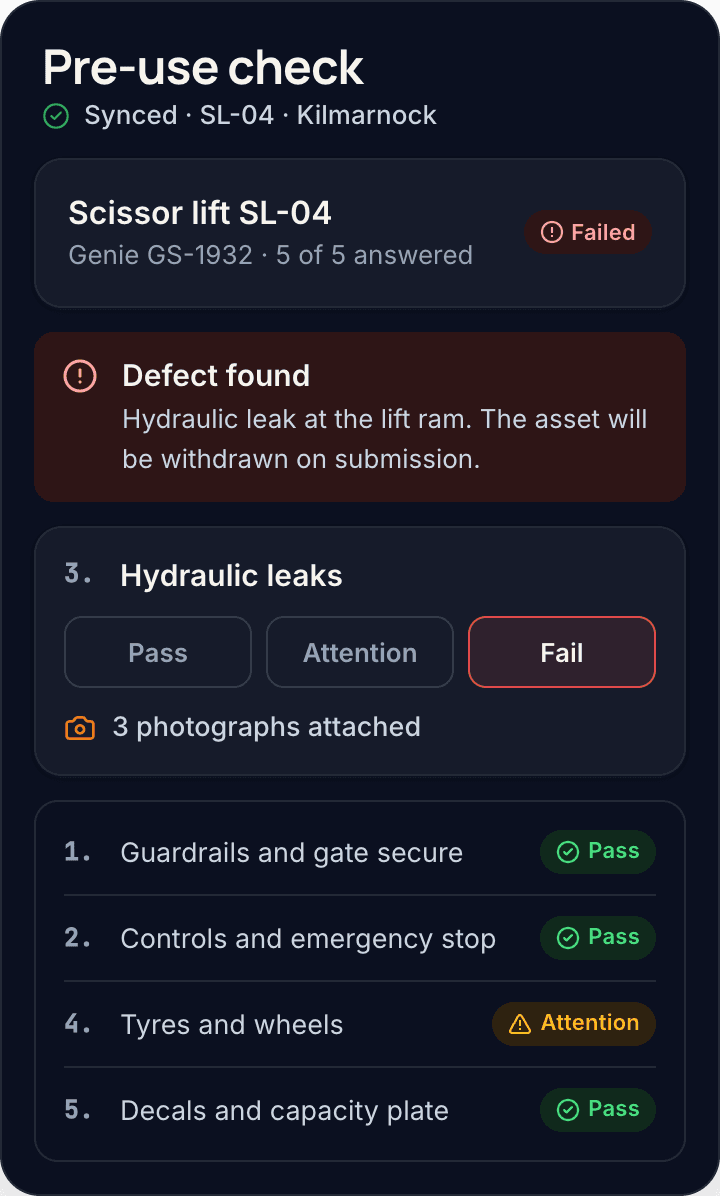
Roveya Admin
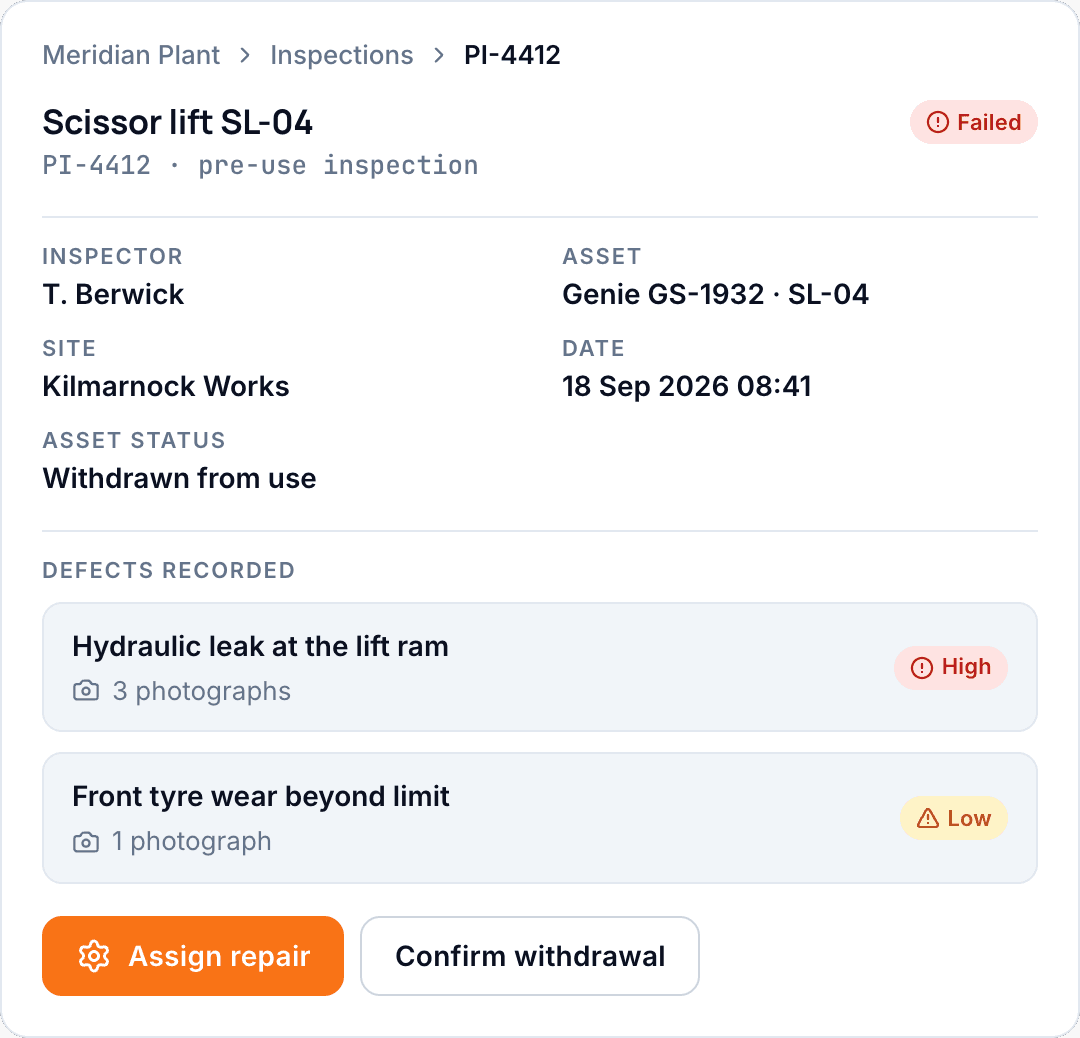
Record relationship
A failed check withdraws the asset from availability.
PI-4412 is the failed pre-use inspection that withdrew SL-04 and opened fault FL-0318. Assigning the repair is the next step, taken in Admin — see Issues.
Roveya Ops · Pre-use check. Roveya Admin · Inspection detail. Example data shown.
Service intervals in hours or calendar time, faults, repair status and the availability consequence made obvious.
A fault reported at the machine withdraws the asset, notifies the manager and starts the repair — without anyone re-describing it.
This continues the failed pre-use check shown under Inspections. The fault record is held against the asset, the site and the person who found it.
A cut-off saw and a mini excavator are both allocated, checked out and inspected — they just sit at different scales.
Service parts, wear parts, lubricants and consumables against a minimum level per location — so a service is not held up waiting for a filter.
Levels and minimums per location, updated by a person. Roveya is not warehouse software and there is no automated purchasing.
Roveya Hub · Alerts. Example data shown.
Every event carries the user, the date, the location, the action and the resulting status — from registration to retirement.
The manual, the certificate and the last service record belong to the asset, not to a shared drive.
Superseded versions stay on the record rather than being deleted, so the history of the asset holds up.
Documents attached to equipment, not general-purpose document management. The value is the relationship to the asset.
Holding a machine, allocating it and retiring it are three different permissions.
These are operating contexts Roveya suits, not customer references.
Next step
Walk through equipment allocation, inspections, faults and maintenance against the asset record.